Simulator library
Built for students, teachers and the curious. Open a component, change its real electrical parameters, and watch the 3D model and characteristic curves respond as you go.
28 interactive models
Electrical machines
Convert electrical energy and mechanical motion.
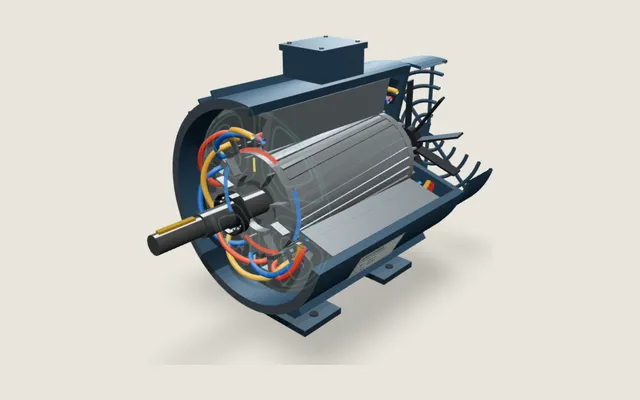
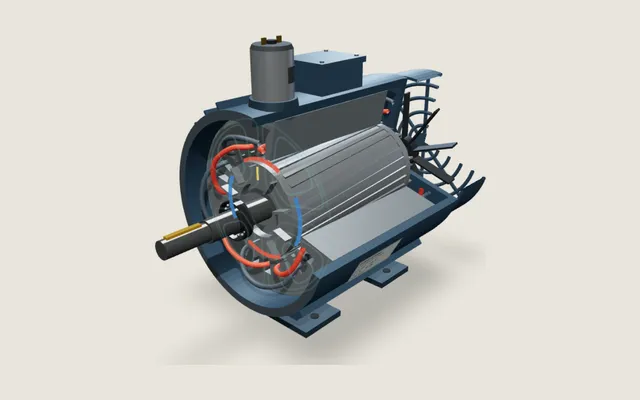
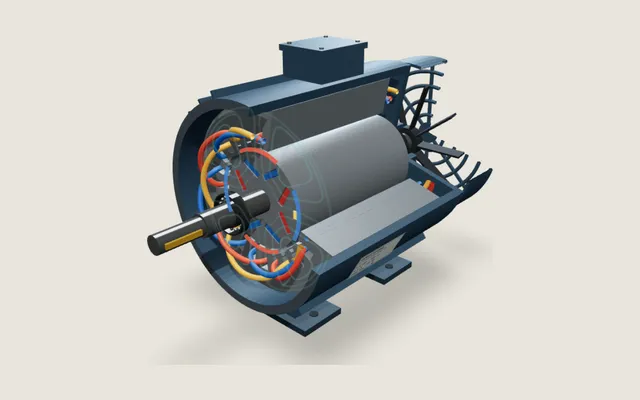
3-phase inductionExplore how a rotating magnetic field produces torque in a squirrel-cage rotor.Open simulator Single-phase inductionSee why a single winding cannot start a motor on its own — and how a second winding, a capacitor and a centrifugal switch give it a push.Open simulator
New
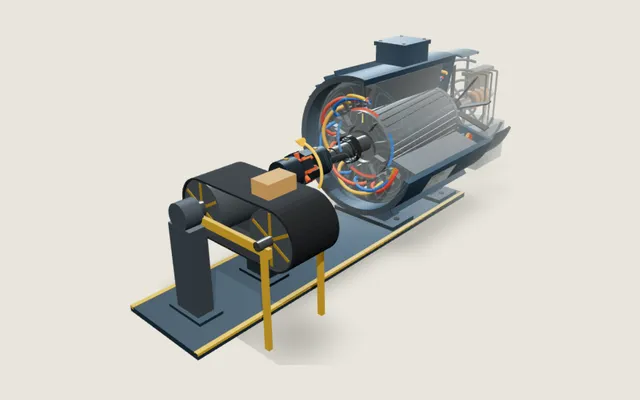
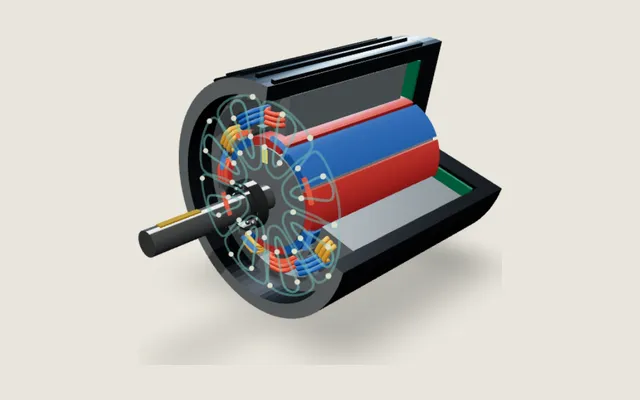
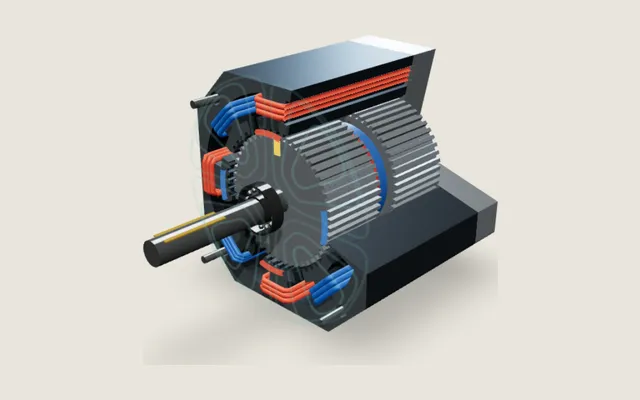
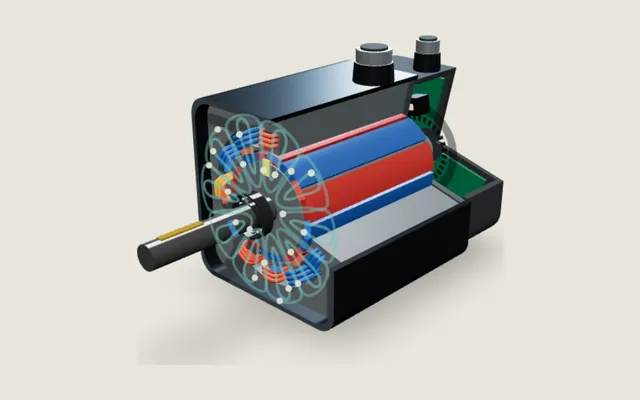
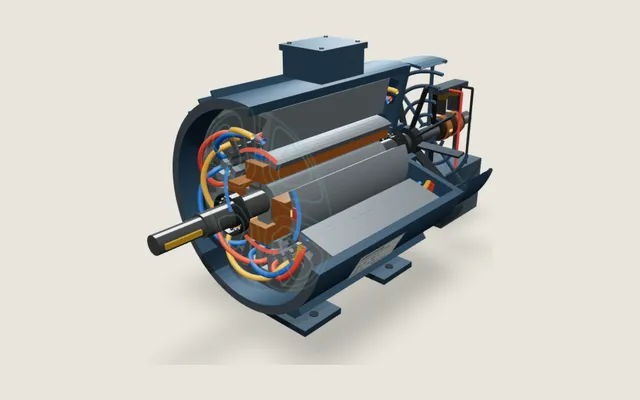
Wound-rotor inductionAdd resistance to the rotor through the slip rings and watch the torque–speed curve shift: higher starting torque, lower starting current, adjustable speed — paid for in slip power.Open simulator Brushed DCExplore how brushes and a commutator keep the armature torque rotating in one direction.Open simulator Brushless DCObserve how the inverter energizes three-phase stator windings in sequence to rotate a permanent-magnet rotor.Open simulator Synchronous (PMSM)See why a synchronous rotor locks exactly to the rotating field — and what happens when the load pulls it out of step.Open simulator StepperWatch the rotor advance one discrete step per pulse — and see what happens when the pulse rate outruns the available torque.Open simulator ServoSee how a closed loop holds the rotor on the commanded speed — and how the following error grows with speed until you raise the loop gain.Open simulator 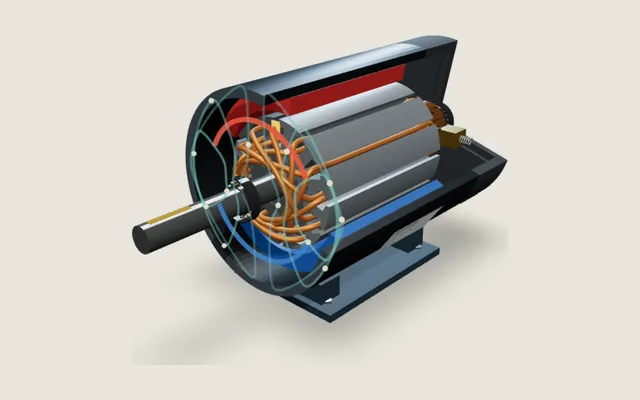
New
Synchronous (wound-field)Turn the DC field current and watch the power factor swing from lagging through unity to leading — the motor that can also correct the grid. See the V curves, the load angle and the pull-out limit.Open simulator 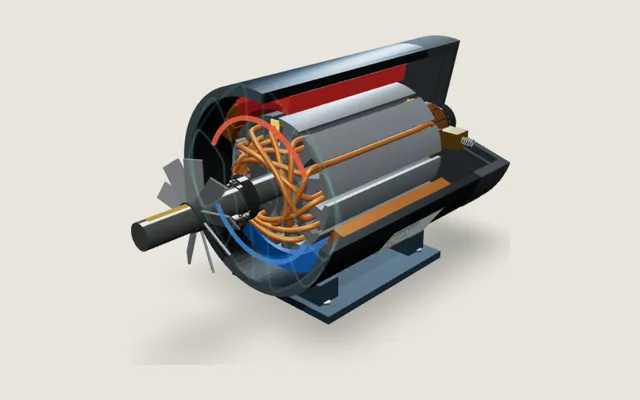
New
Universal motorSwitch between AC and DC and watch a series motor keep turning the same way, because torque follows the square of the current. See the speed drop on AC, the runaway at no load and how a triac sets the speed.Open simulator 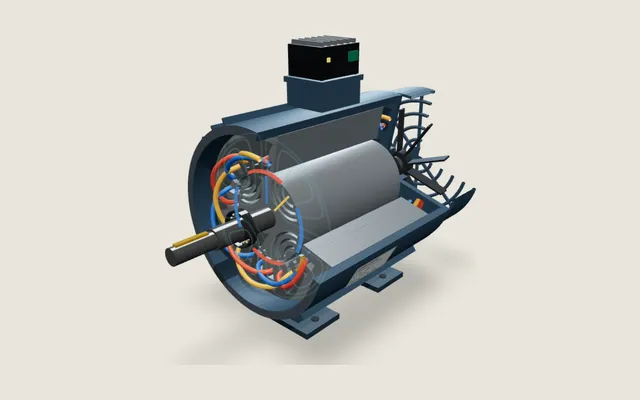
New
Synchronous reluctanceA rotor of plain laminations, cut by flux barriers, makes torque from saliency alone: no magnets and no windings. Change the saliency ratio, the current angle strategy and the speed to see MTPA, the power factor ceiling and field weakening.Open simulator 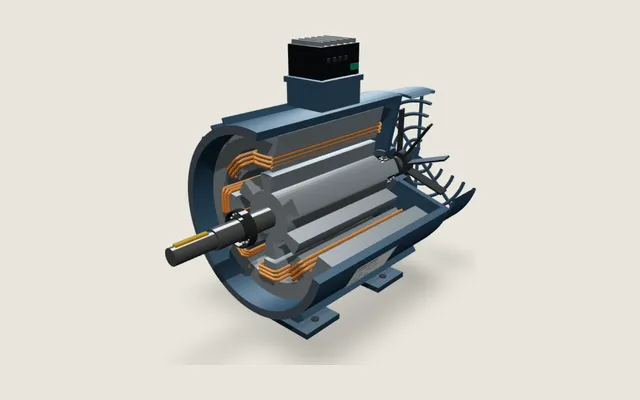
New
Switched reluctanceStator and rotor both have salient poles, and the rotor carries neither magnets nor windings. A converter energises one phase after another as a rotor pole approaches alignment. Move the turn-on and turn-off angles to see the current pulse, the torque ripple and the negative torque of a late turn-off.Open simulator 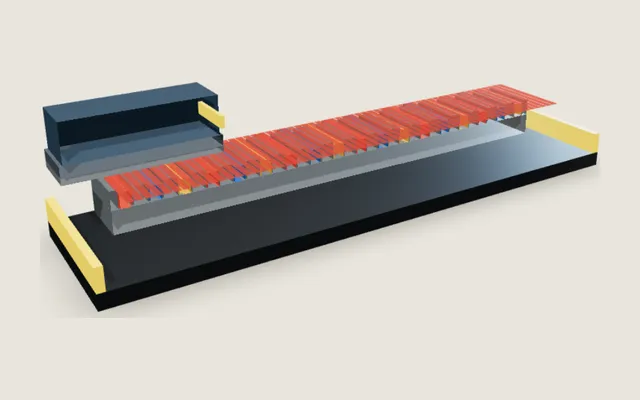
New
Linear inductionAn induction motor cut open and rolled flat. The stator makes a field that travels at 2·τ·f instead of rotating, and a conductive plate on back iron is dragged along with slip, giving thrust instead of torque. Change the air gap, the plate and the track to see the poor power factor, the end effect and a launch run.Open simulator 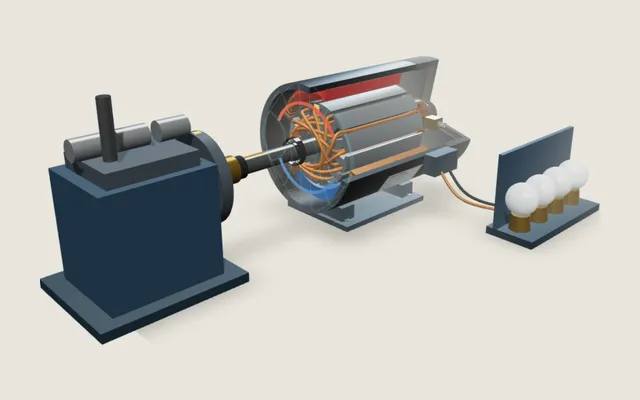
New
DC generatorA DC generator turns shaft power into direct-current power. Its EMF is E = k·Φ·ω, so it follows the speed and the field flux. Change the connection, the field rheostat, the speed and the lamp load to watch a shunt machine build up from residual magnetism, to find the critical resistance and speed beyond which it fails, and to compare the load characteristics and the voltage regulation.Open simulator 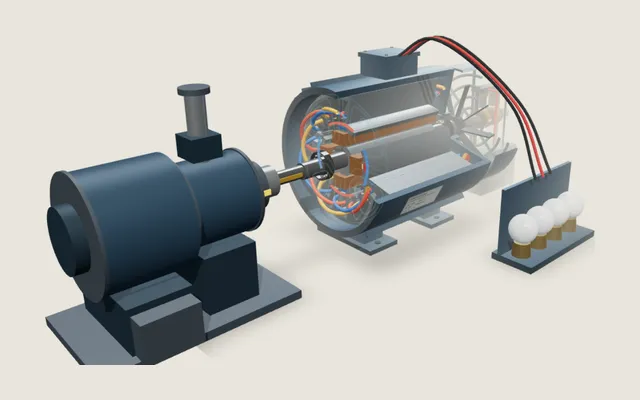
New
Synchronous generator (alternator)A turbine turns the salient-pole rotor while the DC field sets the EMF E_f = V + jXs·I. Run it islanded to see how load size and power factor move the voltage, or parallel it with the grid: the turbine sets P, the field sets Q, and the load angle shows how close you are to pole slipping.Open simulator 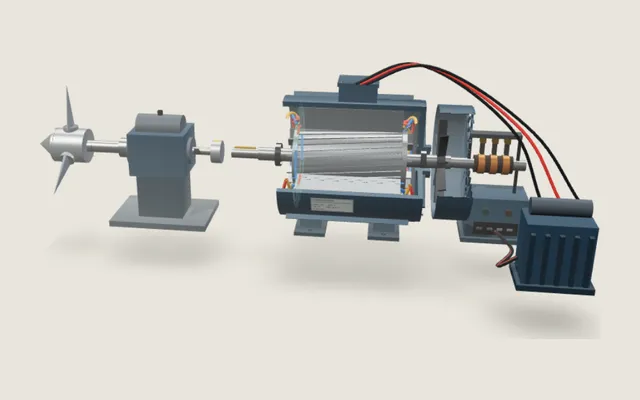
New
Doubly-fed induction generator (DFIG)A wind-turbine generator: the stator is tied to the grid while a back-to-back converter feeds the slip rings with only about a third of the power. See the speed follow the wind, the rotor power reverse at synchronous speed and the stator reactive power follow its set-point.Open simulator Semiconductors
Control current with solid-state devices.
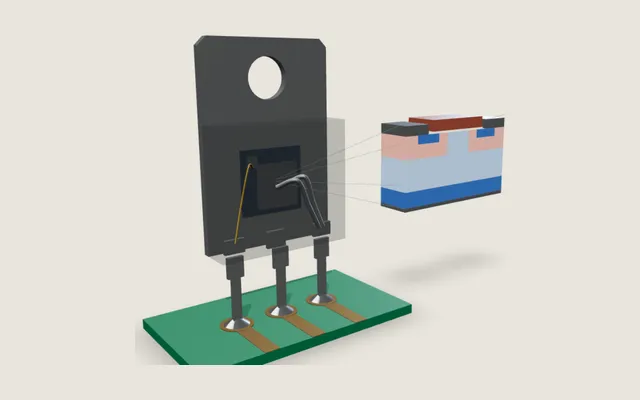
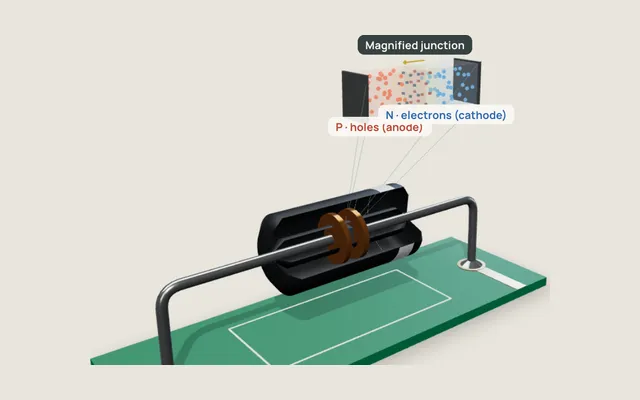
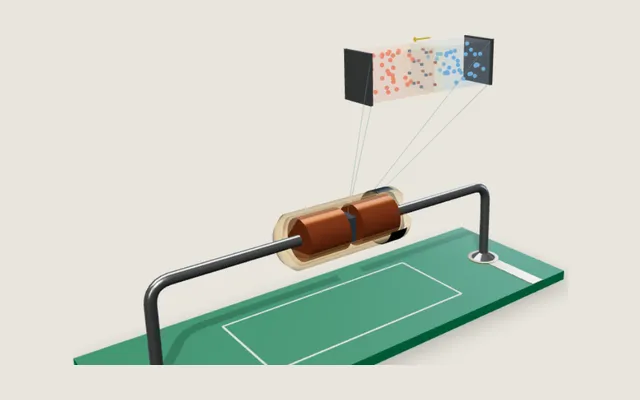
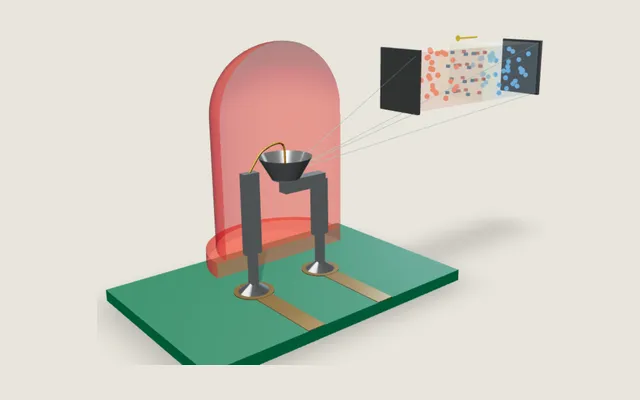
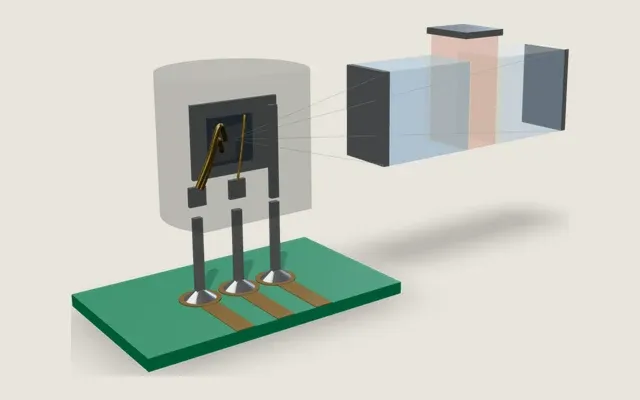
N-channel MOSFETSee how gate voltage creates a conductive channel and controls drain current between source and drain.Open simulator P–N junction diodeSee how the depletion region enables forward current, blocks reverse current and changes during breakdown.Open simulator Zener diodeSee how a Zener diode is built to survive reverse breakdown on purpose — once the knee is reached, the voltage across it barely moves even as the current swings.Open simulator LEDSwitch between real LED colors and watch why the current, not the voltage, is what you actually control — and why a bare LED on a supply is always one step from burning out.Open simulator
New
NPN transistorSee how a small base current controls a much larger collector current, and how the transistor moves from cutoff through the active region into saturation.Open simulator 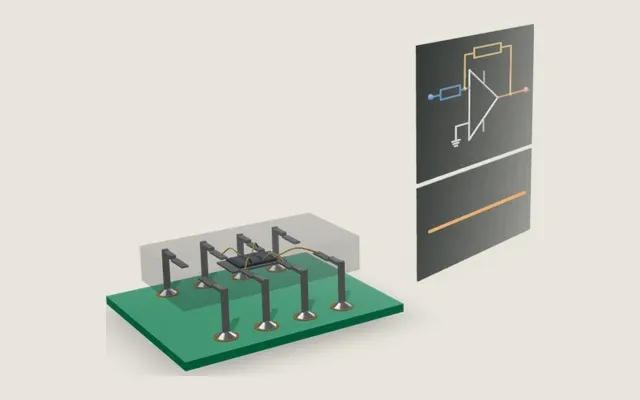
New
Operational amplifierSet the feedback resistors and watch how gain, clipping at the supply rails, bandwidth and slew rate shape the amplified signal.Open simulator Transformers & magnetics
Transfer and store energy with magnetic fields.
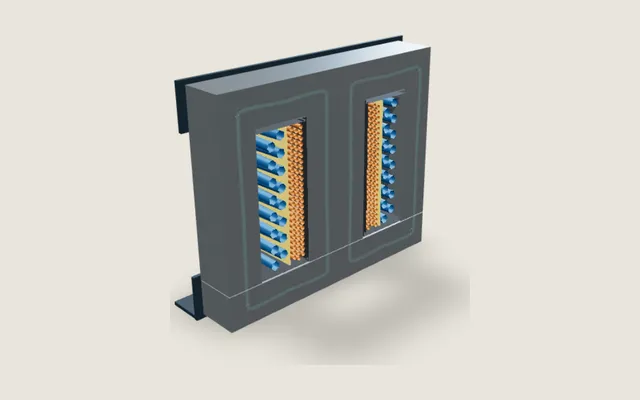
TransformerObserve how alternating magnetic flux transfers energy from the primary winding to the secondary winding.Open simulator
New
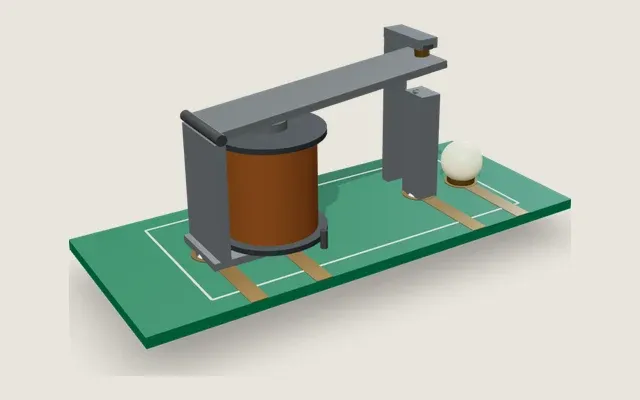
Electromagnetic relayWatch a small coil current pull an armature onto the core, close a contact that switches a much larger load, and release only after the voltage falls well below the pull-in level.Open simulator Passive components
Shape voltage, current and stored energy without amplification.
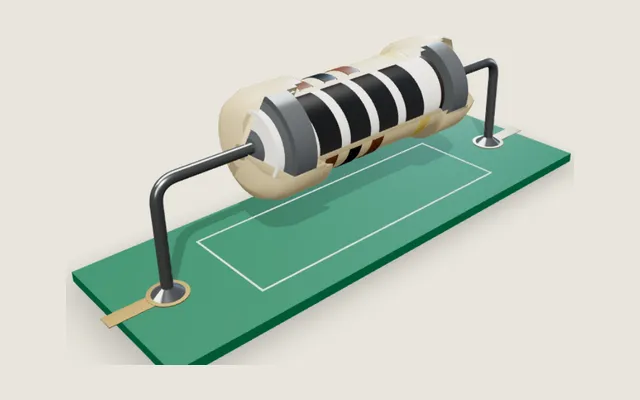
ResistorObserve how resistance limits current, drops voltage and converts electrical energy into heat.Open simulator
New
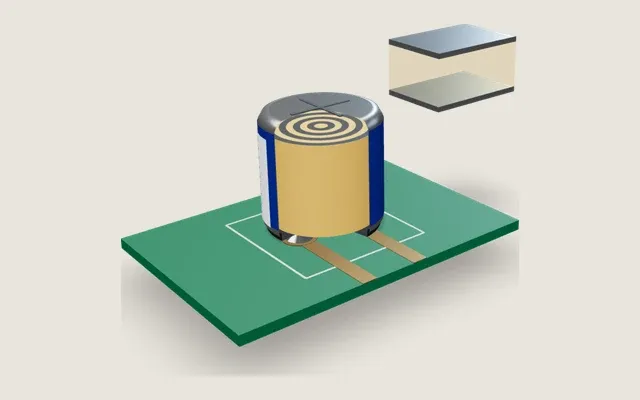
CapacitorWatch an electrolytic capacitor charge through a resistor: charge builds up on the plates, the voltage follows an exponential curve and the time constant τ = RC sets the pace.Open simulator 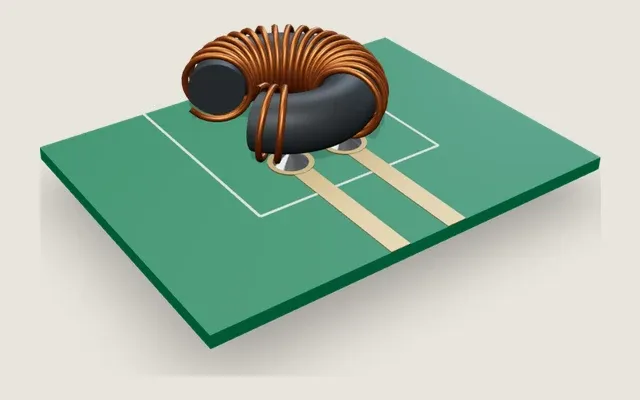
New
InductorSee the current in a ferrite-core inductor rise with the time constant τ = L/R, store energy in its magnetic field and lose inductance once the core saturates.Open simulator Power sources
Store chemical energy and deliver it as electrical power.
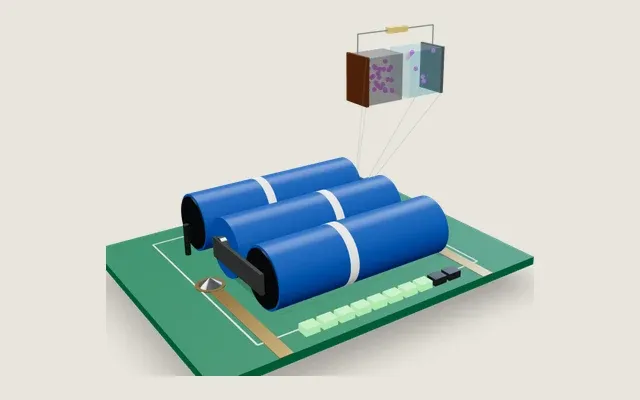
Diagram symbol system: IEC 60617-inspired technical notation